
Reduce and Defer Costs in a home renovation– Part 2
This is part two of a two part series where we look at two effective strategies for immediate cost reduction and budget flexibility in your house renovation, and still achieve the home you’re shooting for.
In order to bring down the upfront total construction budget, Part One talks about choosing your interior finishes to upgrade later and choosing a classic base for the final touches to come in the future when budget allows. In Part two, we will look at several overlooked opportunities for deferring costs.
Part Two: Opportunities to defer costs
Remembering that our goal is to achieve a functional, and budget friendly renovation that is ready for final finishing touches. Here are more examples on how you can choose to reduce the upfront cost on your home renovation.
Appliances: Consider delaying the purchase of appliances like wine fridge, dishwasher, second oven and dryer. Ensure plumbing and electricals are installed in preparation for future use and space is accounted for when designing and installing cabinetry. You may choose to purchase these items when the model you’re looking for is back in stock, or wait for the sales to come, or defer to a later stage in life when family is bigger.
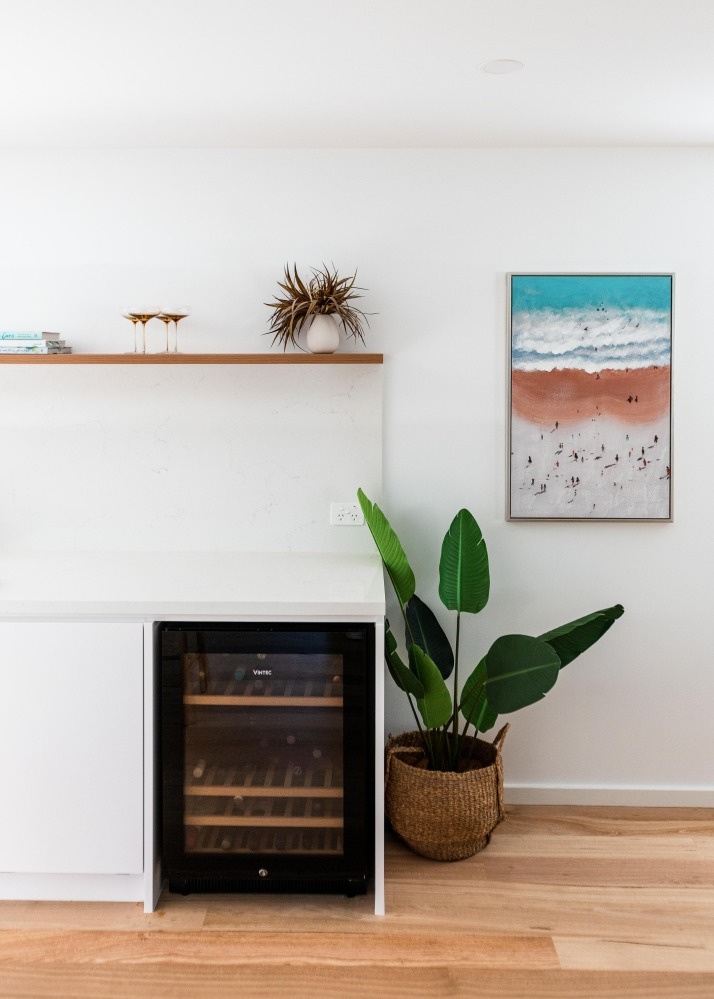
Cabinetry: Floor to ceiling Joinery, walk-in pantries and lengths of kitchen bench can make a kitchen functional, however, every millimeter of benchtop (and splashback) adds up to the cost of the granite or engineered stonetop you’re paying for.

Joinery: Consider minimising the joinery you are going to have that will still suit the family’s needs and defer the ‘extra’ joinery and benchtop or island until a later date. Other joinery that can be deferred may include fireplace, kitchen island study and media joinery. However, be sure to install plumbing and electricals in the first part of your renovation, so that you are ‘service-ready’.In this image, we can see the vision of this living space. We can also see the costs that can be deferred, the joinery, the lining boards and the fireplace are all easily updated and installed later when budget permits.

Fireplace: You can install the fireplace, joinery, stonework/tiles and accessories later, providing the authority approvals and dimensions are considered. This can be a substantial differed cost.
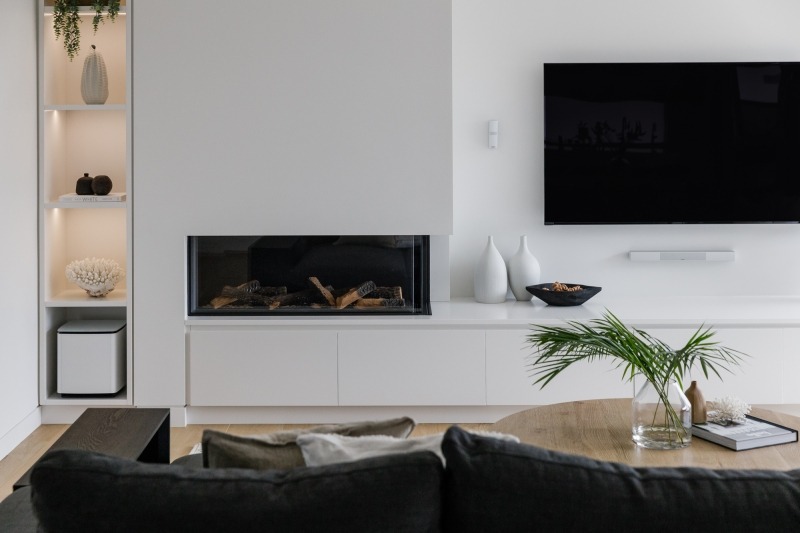
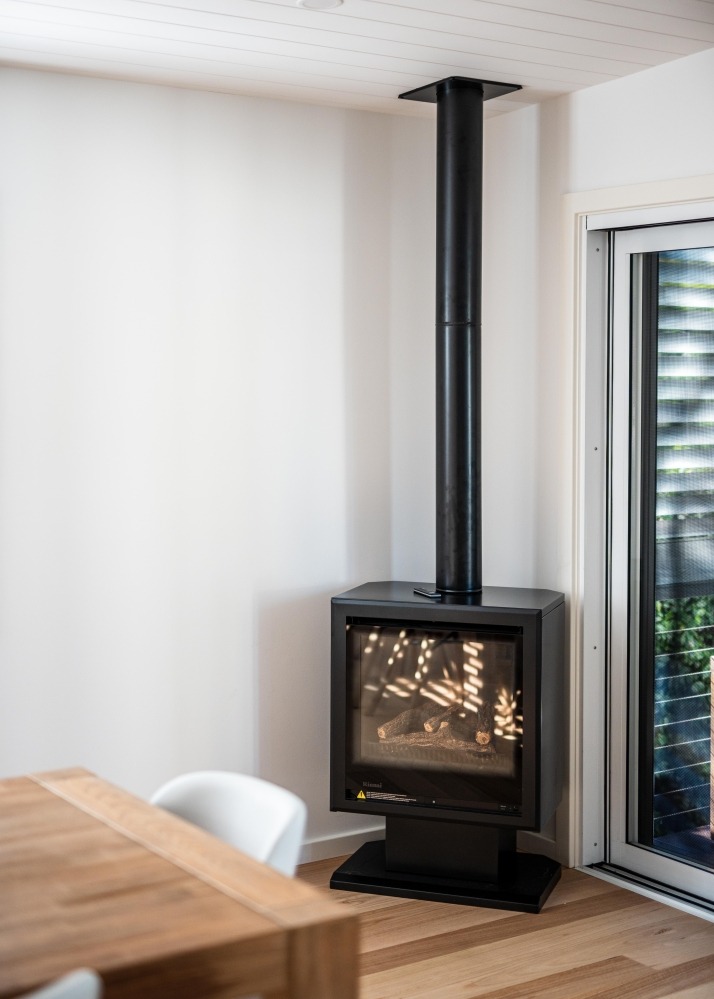
This project has it all, the concealed blinds, the media joinery, the lining boards behind the TV and the fireplace. An amazing place to be in winter and enjoy company. These upgrades are easily installed at a later date and can be deferred to alleviate upfront costs now.
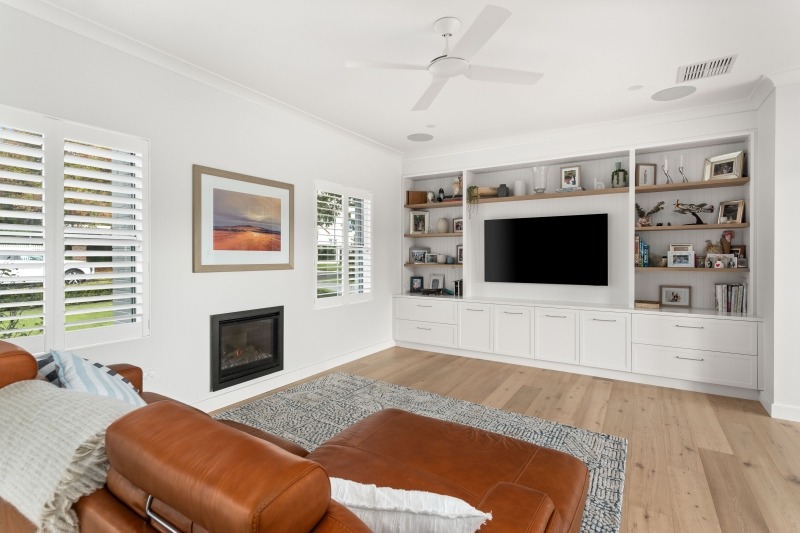
Air-conditioning: You may choose to install the ductwork and duct covers (an estimate of $4000) whilst you’re renovating, and choose to install the mechanical plant later (an estimate of $9000).
It is important to note that not installing the ductwork could cost you more later. Having to take apart finished surfaces like the ceiling, floor finishes, particle board and/or alter floor framework will cost an estimate of $7000 more for demolition and rectification. This doesn’t make sense and doesn’t save money in the end. However, installing concealed elements such as air-conditioning ductwork and grill whilst you’re already renovating will cost $4000 now and $9000 later for the expense of the mechanical plant. This deferred cost means you can move in sooner and be ‘service-ready’ when the time comes.
External: If a desired open or louvred roof is not essential to enjoy your patio or backyard immediately, Hold on to your vision for a later renovation project and defer the cost by having an outdoor umbrella now.
 Louvred Roof by Rossmark Building Designers

Landscaping: You can take your time with designing your yard space at a later date. Consider grass first, garden bed and plants later. Once you start a garden bed, that will come with its own separate upfront cost that you will be glad to have deferred.
The Bottom Line: Build Smart, Finish Later
Focus on creating a strong, weatherproof structure with fully functional utilities and functional space design for the family. The finishes are the easiest and least disruptive part to upgrade over time. By consciously minimizing the initial spend on interior cosmetics—the highest percentage cost driver outside of the basic structure—you are making a smart financial decision that gives your budget stability and future flexibility. You save the money now, and you use it later to truly personalize and complete your space.
Back to Smart Home Renovation Savings: Part One